The high priest found the Bible while renovating the temple. Not rediscovered, not recovered from a library — found, as in it had been completely lost. Somewhere between the 55 years of Manasseh’s reign and the eight-year-old boy who inherited the throne after him, the Book of the Law got put in the rafters and nobody went looking for it.
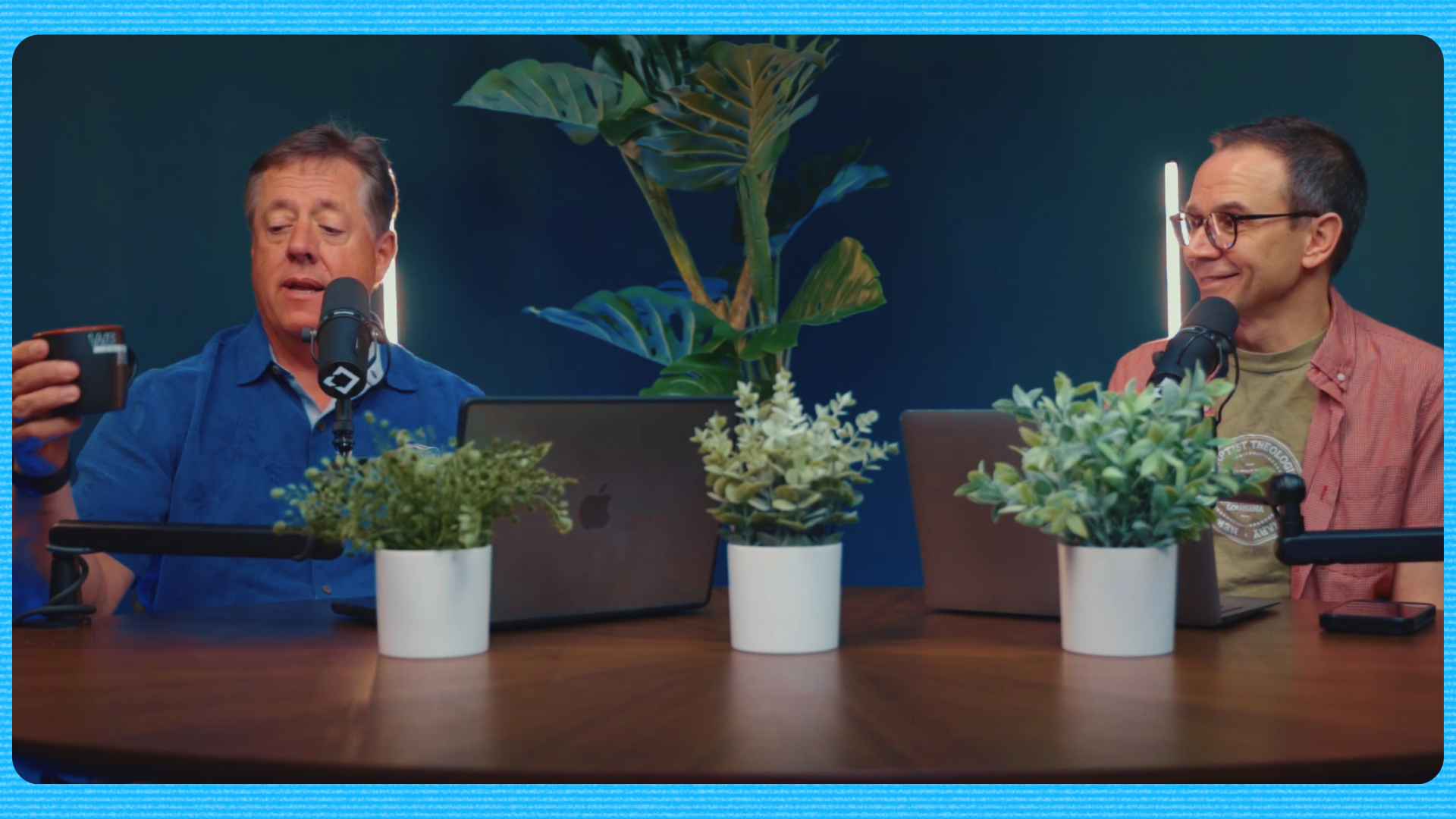
This week’s episode of What We Didn’t Say on Sunday was recorded on Gator Day — students back in Gainesville, the energy back in the city — with Beau Martin sitting in for Pastor David Chauncey alongside Pastor Richie Baldwin. Richie preached on Josiah at Southwest. Beau recaps what David preached at the Newberry Road campus. Between the two of them, they cover the whole story: why the Bible got lost, what Josiah did when he found it, and how a man named James’s baptism that Sunday morning was a Josiah-shaped moment.
Richie’s Sermon: Surrender, Serve, Saturate
Richie’s three-point framework for the Southwest campus sermon moved in a clean progression. First: surrender to the transformation given by God’s word. When Josiah found the Book of the Law and heard it read, he didn’t evaluate it or fact-check it against the existing cultural consensus. He tore his clothes — an ancient sign of grief and repentance — because the word revealed exactly where Judah stood before God, and his heart was tender enough to receive that.
Second: serve for greater impact. The word didn’t just change Josiah internally. He read it to all the people of Judah, made a public covenant before God, and then went out and purged the land of idols — not just in Jerusalem, but up into the ruins of the northern kingdom that had been destroyed a hundred years earlier. At the end of the sermon, Richie turned on every bulb in the Alachua sign that Southwest had deliberately dimmed. That’s what he wanted the church to do: saturate their world with what they’d received.
Third: saturate the world with the word. He pointed to Isaiah 59 — Isaiah, who was warning Manasseh during his worst years, who could see the injustice and corruption and knew judgment was coming — and to the greater king even than Josiah that Isaiah could see arriving on the horizon. The charge to the church, and especially to the students in the room on Gator Day: be like Josiah. Take the word out. Go on mission.
What David Preached: Seek, Tear Down, Build, Surround
Beau’s recap of the Newberry Road campus sermon covered David’s four-point framework through the generational chairs lens he’s used all series: committed, compromised, cultural, collapsed. Josiah inherited the worst possible chair — collapsed, after 55 years of Manasseh and two more of Amon — and reversed it because he was willing to seek God for himself before he fully understood why.
David opened with the Second Great Awakening. After the Revolutionary War, church attendance in America dropped from around 45% to somewhere between 5% and 10%. A poll at Harvard found zero students willing to identify as believers. Yale had five. Then Isaac Backus started a prayer meeting. Timothy Dwight became Yale’s president and started preaching in defense of Scripture’s authority. What started with one person became the Second Great Awakening, and the church grew ten times faster than the population. Same pattern as Josiah. It starts with one.
The four points: seek God for yourself — Josiah started at 16, before he found the book, because something in him knew things were wrong. Tear down what pulls you back — but know what you’re replacing it with, because a hole is still a hole. Build your life on God’s word — Josiah tore down idols and then found the book at 26, and the book is what told him what to build on instead. Surround yourself with people who will help you — Josiah had Shaphan, Hilkiah, Huldah, Jeremiah, and Zephaniah. He wasn’t doing it alone.
Why Was the Bible in the Rafters?
This is the most surprising question in the whole story, and Richie spent real time on it. The answer, in his reading: the Levites. The priests and Levites were the ones charged with administering God’s word to the people, interceding between the congregation and God. The prophets ran in the opposite direction — bringing God’s voice to the people. But the Levites, beginning with the split kingdom and accelerating through Manasseh’s reign, stopped doing their job. They put the word on a shelf and filled the temple with everything else.
Richie traced this thread all the way from Judges 19 — the grotesque collapse of a Levite at the very end of the book of Judges, showing how far the priests had already fallen before Israel even had kings — to Ezekiel 22 and 34, where God pronounces specific judgment on the shepherds who failed to feed the people. The breadcrumbs were there the whole time. Hilkiah finding the book in the temple isn’t a random discovery. It’s the providence of God routing his word around the people who were supposed to guard it, to get it into Josiah’s hands.
“The Josiahs of the world had to find it. Praise God that he found a way to get him his word — but you have failed in so many ways.” — Pastor Richie Baldwin (summarizing Ezekiel’s charge to the Levites)
Deconstruction vs. Tearing Down Idols
Beau asked the question directly: what’s the difference between what Josiah was doing — tearing down idols, reforming the culture, removing what his grandfathers built — and what gets called deconstruction today? From the outside, the actions look the same.
Richie’s answer went to Romans 12:2: do not be conformed, but be transformed by the renewal of your mind. The problem with deconstruction, as it’s most often practiced, is that it handles the nonconformity part without the transformation. Something gets removed. Nothing gets put in its place. A hole is still a hole. Josiah tore down the Baals and found the book. He knew what he was building on. The dangerous version is when someone dismantles biblical morality, marriage, or the gospel itself — thinking they’re removing hypocrisy, but actually removing the foundation.
Richie applied it to his own story: he came from the Roman Catholic tradition and had real things he needed to deconstruct about what the church had taught him. But he did it by holding everything up against Scripture and asking what God’s word actually said. The rock stays. The idols go. Ephesians 2:20–21 is the frame: the whole structure is built on the cornerstone of Jesus Christ, and it’s in him that everything is joined together.
Why Huldah and Not Jeremiah?
When Josiah’s people needed to inquire of God, they went to Huldah — a prophetess, wife of the royal wardrobe keeper, living in Jerusalem — and not to Jeremiah, who was active during Josiah’s reign and would go on to write the longest book in the Bible by word count. Beau asked why. Richie’s honest answer: Jeremiah may have been more prominent after Josiah, not during. Things were going relatively well under Josiah. The prophets who speak most clearly in crisis tend to surface when things get worse, and Jeremiah’s heaviest work came during and after the exile. Huldah was well-respected, clearly heard from God, and gave Josiah exactly what he needed: confirmation that God had heard his tender heart and was giving Judah more time.
Frederick Douglass and a Sunday School Class of 40 People
Richie’s addition to Beau’s Second Great Awakening recap was Frederick Douglass — a man who didn’t even know his own birthday. As a slave, the first thing Douglass wanted when he learned to read was the New Testament, because he didn’t just believe slavery was wrong. He wanted to know what God’s word said about it. He started teaching 40 people — fellow slaves, meeting in secret for a Sunday school class — and that circle eventually multiplied into one of the most influential voices in American history, including a close advisory relationship with Abraham Lincoln.
The through-line Richie drew: Josiah changes things starting with the word. Frederick Douglass changes things starting with the word. The Second Great Awakening changes things starting with one person who was obedient to the word. The pattern is the same every time.
James and David | The Baptism That Closed the Episode
Beau closed the episode by telling the story of a baptism from the 9:30 service that morning. A man named James, who grew up with a not-so-good spiritual legacy — physical abuse, the foster care system, no model of what a functional family looked like. Through a series of events, he got a job working for a company that made him feel like family. He started seeing what a dinner table without yelling looked like. He eventually gave his life to Christ and was baptized that morning by David.
Josiah looked back to David as the committed chair — the model he couldn’t find in his own family tree. James looked back to David as the model he didn’t have either. The parallel wasn’t planned. It was just the story of a Sunday.
Also in this episode
- Gator Day Sunday at Westside — the energy of welcome week, students back in Gainesville, overflow at Southwest
- The generational chairs (committed → compromised → cultural → collapsed) and how Josiah entered the throne at the collapsed point
- Richie’s observation that the story of Josiah’s sons shows how quickly revival can be reversed — his first son after him “put the word back on the shelf” within a few years
- Psalm 72 as the messianic psalm the people were praying — begging for a king who would actually be just — and how verse 17 points all the way to Christ
- Richie fell in the baptistery on Sunday. He got a very cold bath.
Why Was the Bible Lost in the Temple During Josiah’s Reign?
The most likely explanation, according to most scholars, is the failure of the Levitical priesthood. The Levites were charged with administering God’s word to the people — keeping the law, instructing the nation, maintaining the temple’s integrity. Through successive generations of compromise, particularly during the 55-year reign of Manasseh, the priests appear to have set aside the Torah and allowed the temple to be filled with pagan worship objects instead. The book wasn’t destroyed — it was neglected. When Hilkiah found it during Josiah’s renovation of the temple, it was still there, simply unread and forgotten. Ezekiel 34 records God’s later indictment of the shepherds who failed to feed the flock: a pattern that began long before Josiah and contributed directly to the conditions he inherited.
Frequently asked questions
Josiah’s reform and what gets called “deconstruction” today can look similar from the outside — both involve removing things that have been built up over time. The critical difference is what happens next. Josiah tore down the idols and built on the word of God — he knew what he was replacing them with. Deconstruction, as often practiced, removes things without identifying what to build on instead. Romans 12:2 captures the biblical framework: do not be conformed to the world, but be transformed by the renewal of your mind. Both halves are required. Removing false things is part of the Christian life. But the cornerstone — Jesus Christ himself (Ephesians 2:20) — is not one of the things available for removal. Anything built on something other than that cornerstone, or built on nothing at all, is not reformation. It’s collapse.
Huldah appears in 2 Kings 22 and 2 Chronicles 34 as the prophetess consulted when Josiah’s officials found the Book of the Law. She was the wife of Shallum, keeper of the royal wardrobe, and lived in the Second Quarter of Jerusalem. When the king’s delegation brought the newly found book to her, she responded with a direct word from God: judgment on Judah was coming because of the nation’s idolatry, but because Josiah’s heart was tender and he had humbled himself before God, he would not see the coming disaster in his lifetime. Huldah is one of seven female prophets recognized in the Old Testament and is notable for being consulted directly by the royal court, which suggests her prophetic authority was well established and trusted in Jerusalem.
Scripture Referenced: 2 Kings 22 • 2 Chronicles 34 • Isaiah 59 • Psalm 72 • Psalm 110 • Romans 12:2 • Ephesians 2:20–21 • John 15 • Ezekiel 34 • Habakkuk 1–2