Drive around Gainesville long enough and you'll see them. Potholes circled in white paint, sometimes with a traffic cone dropped in the middle for good measure. People got tired of waiting, so they marked the problem themselves.
Pastor David opened his Titus sermon with that picture, and it's the best way I know to explain why Paul is so worked up in Titus 1:10-16. Crete had theological potholes. Paul wanted them marked, and he wanted them filled.
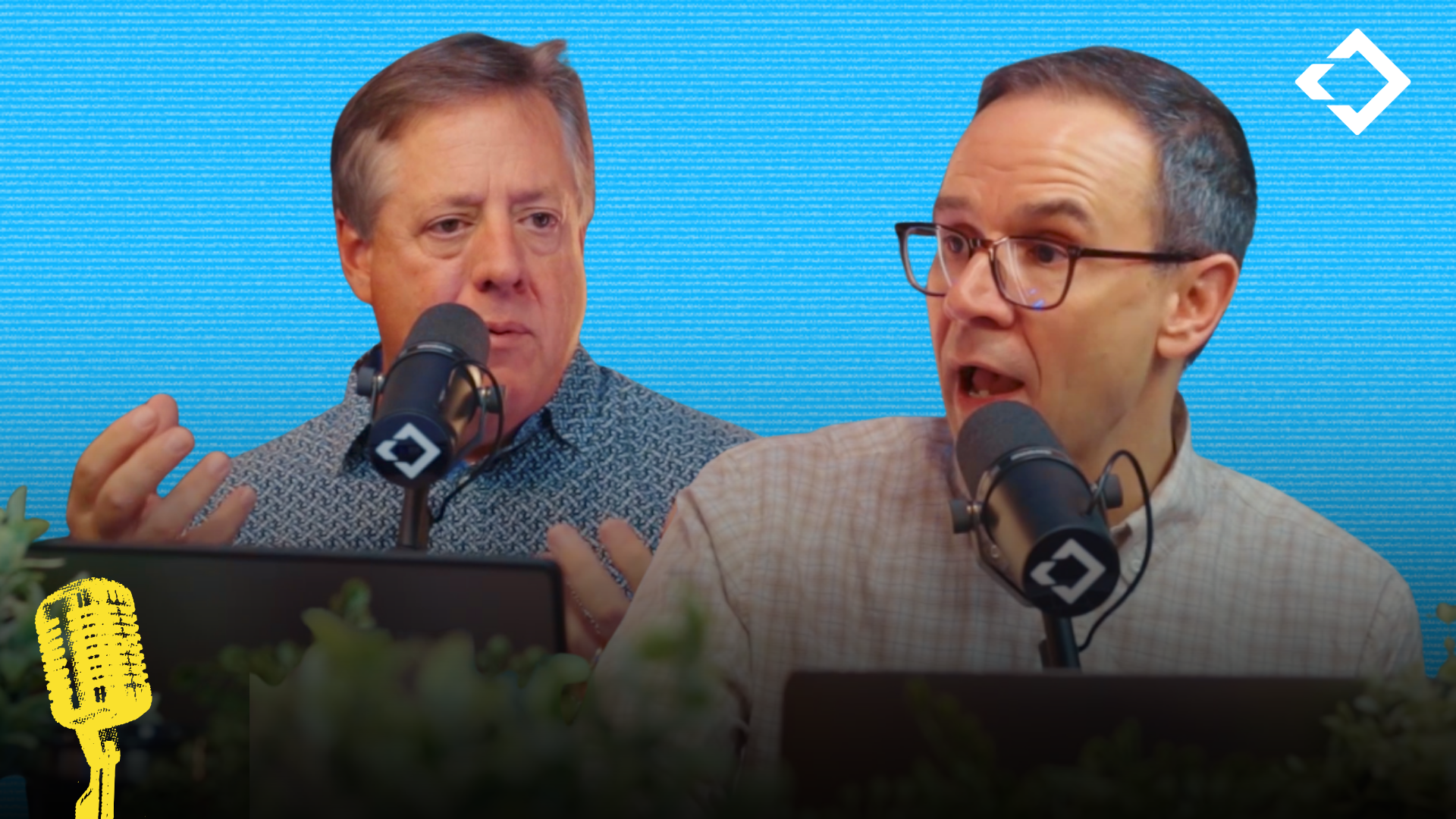
Then David and Richie sat down on Monday to talk about what didn't fit into Sunday. It gets practical fast.
The short version
- It rarely sounds false. The worst false teaching usually starts with "turn in your Bibles."
- Paul has four complaints. It's empty, deceptive, divisive, and it defiles good works.
- "Rebuke sharply" is about correction. The goal is to restore the teacher, not remove him.
- You can mislead without lying. Hyper-focus on one doctrine can do the same damage.
- You can't spot potholes alone. Foundation, discernment, community.
Why is Paul so worked up?
Because bad teaching does more than get a doctrine wrong. David boiled Paul's complaint down to four things.
- Empty. It tastes good and doesn't fill you. A placebo.
- Deceptive. It convinces people of something that isn't true.
- Divisive. In Crete the churches met in households, so a bad idea could split a whole family.
- Defiling. Look at verses 15 and 16. It spoils the good works the whole series is about.
That last one ties it back to Kingdom Works. You can do plenty of good and still have it undercut by what's being taught underneath.
What does "rebuke them sharply" actually mean?
It sounds harsh, and Paul means it to. But David's point on Sunday was that the target is the teaching, and the goal is the person.
“It's not to kick people out. That's not the goal. The goal is correction, that they may be sound.” Pastor David
His best example is Paul confronting Peter in Galatians 2. David's three words for it: personal, pointed, purposeful. Paul went to Peter's face and said it plainly. And he did it because Peter's behavior was contradicting what Peter himself had taught. Not to embarrass him.
Richie added Alexander and Hymenaeus from 1 Timothy 1. Paul says he handed them over to Satan, which sounds brutal until you read why: so they would learn not to blaspheme. Even the hardest rebuke in the New Testament is aimed at getting someone back.
Why does bad teaching start with "turn in your Bibles"?
David's claim is that almost all false teachers, and the worst false teaching, open with the same line. I believe the Bible. I preach from the Bible. And then comes the plus.
Richie remembered a seminary day when Jim Shaddix told the graduating class, "Get your hermeneutics right, get your exegesis right." Exegesis pulls the meaning out of the text. Eisegesis pushes your own meaning in.
Satan does exactly that in Matthew 4. He quotes Scripture to Jesus and uses it wrong. Jesus answers with Scripture used right.
One more thing worth sitting with. David noted that the New Testament spends far more energy defending the faith inside the church than arguing with outsiders. The false teachers Paul worries about claim the name of Christ.
Can a teacher say nothing false and still lead you astray?
This is the part David didn't get to on Sunday, and it's the one we'd point you to first.
His idea: some false teaching isn't false in its content. It's false in its hyper-focus. Pick one doctrine, prophecy or signs and wonders say, and hammer it while neglecting the rest. You can grow a big church that way. Every sentence checks out and the whole picture is still bent.
It loops back to the word Paul uses at the start of the letter, ortho. Put in order. In balance.
Where does false teaching like to hide?
David's observation is that almost all of it comes in the seams, the places of mystery and tension in Scripture. Richie walked through a few.
- Faith and works. Luther wanted James out of the Bible. He called it a book of straw.
- God's will and ours in salvation. Lean one way and you get license. Lean the other and you get fatalism and no evangelistic zeal.
- The nature of Jesus. Fully God and fully man. Try to untie that and you land in docetism or a merely human Jesus.
Richie pointed to J.I. Packer's short book Evangelism and the Sovereignty of God, and to Spurgeon's answer when asked how he reconciles two truths: he doesn't try to reconcile friends. They're already reconciled.
Quick answers
How do you spot a false teacher?
Ask three questions. Does it add something to Jesus? Does it twist the text, or ignore most of it? Does it divide the church or undercut its good works? Then check your answers with other believers, not alone.
Does Titus say to silence or remove false teachers?
Titus 1:13 says to rebuke them sharply "that they may be sound in faith." David's reading is that the aim is correction and restoration, not removal.
Can a teacher be wrong without saying anything false?
Yes. David calls it hyper-focus: emphasizing one doctrine so heavily that the rest of Scripture goes missing.
What is theological triage?
A way of sorting doctrines by weight, from Albert Mohler. First level: salvation and who Christ is. Second level: things like baptism. Third level: things like end times.
What does "Bible plus" mean?
It's when someone affirms the Bible and then adds something to it that Scripture doesn't support. Titus calls out the circumcision party. Today the plus looks different, but the pattern is the same.
To spot a false teacher, ask three questions. Does the teaching add something to Jesus? Does it twist the text or ignore most of it? Does it divide the church or undercut its good works? Titus 1:10-16 says the response is a personal, pointed, purposeful rebuke, aimed at correction, not removal.
Scripture Referenced: Titus 1:10-16 (with 1:13). Also referenced: 1 Timothy 1:19-20, Galatians 2:11-14, Romans 12:1-2, Romans 14, Matthew 4:1-11, Matthew 7:21-23, Jude 3, 1 Corinthians 13:12.